







|
Often consumers trying to choose the best calcium supplement are left confused because there are many forms and combinations of calcium on the market and labels are hard to understand. To make the best choice, we must look at the way calcium is absorbed, utilized, and excreted and the co-factors that help or hinder the retention of calcium for proper use in the body.
How Does the Body Absorb Calcium?
Stomach acid is required to convert inorganic calcium (carbonate, phosphate, oyster shell, coral or bone meal) into a soluble, ionized state so it can be absorbed in the small intestine. Stomach acid is also needed for the breakdown of tablets and capsules to make nutrients available for absorption. As we age, stomach acid and absorption of nutrients declines leading to deficiencies. Organic forms of calcium (gluconate, lactate and citrate) are already in a soluble, ionized state and do not require stomach acid.
Active transport sites are located at the beginning of the small intestine. [1] They require the presence of adequate amounts of vitamin D [2] and are limited to between 225 and 450 mg of calcium absorption at any one time. [3] Therefore, when calcium consumption is low, this site can account for a substantial part of absorbed calcium, however, when calcium intake is high, this site plays only a minor role.
Passive diffusion sites are located throughout the alkaline environment of the small intestine particularly at the end of the small intestine where the pH is highest. [1, 2] These sites allow much greater calcium absorption as the absorption rate stays the same regardless of dosage. They do not rely on stomach acid levels, vitamin D intake, age, gender or hormone status and are limited only by intestinal transit time [4]. The absorption rate of calcium at these sites is 48%; [3] however only soluble forms of calcium such as gluconate and lactate, can take advantage of passive diffusion sites as they are able to stay dissolved in this alkaline environment. Only those minerals that are dissolved can move through the passive diffusion sites. [5]
The colon plays a small part in the absorption of calcium and is absorption improved with the presence of certain probiotics. Calcium gluconate stimulates the production of these probiotics in the intestine [6], which lower intestinal pH making calcium more soluble. These probiotics also prevent phytic acid from binding to calcium, thus encouraging intestinal absorption. [5]
Calcium excretion via the kidneys is increased through the excessive consumption of protein, phosphoric acid (found in processed foods and pop), salt, sugar, and caffeine. [4]
Solubility - The Key to Maximizing Absorption
The higher the elemental weight of calcium in a compound, the less soluble the calcium is. Therefore, calcium lactate and gluconate with the lowest elemental weights have the highest solubility, which allows for absorption at all three sites along the digestive tract. [3]
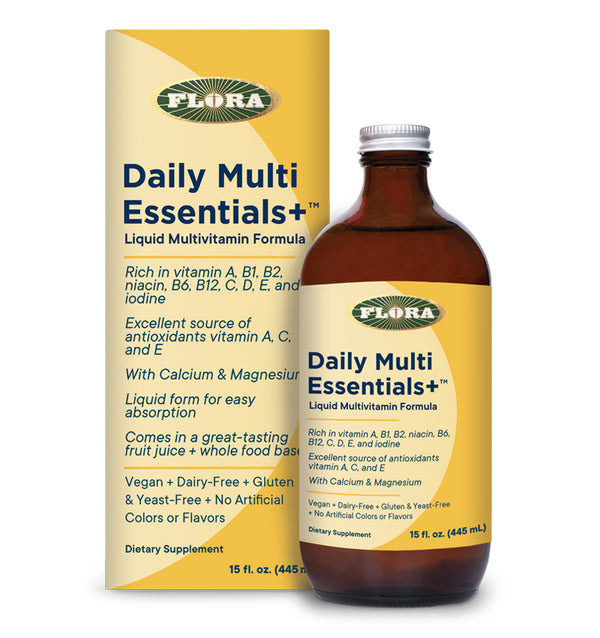
Liquid Solution After traveling through the digestive tract, the average person will have broken down either 20% of a tablet or 30% of a capsule, accessing the same percentage of its elemental calcium. [6] At this stage, any calcium from the undissolved portion of the supplement will be eliminated via the colon, possibly causing constipation, gas, and bloating. [7] A liquid solution is highly soluble and does not need to be broken down, providing approximately 98% [6] of its elemental calcium. Liquid solutions can use much lower doses then solid supplements while still providing as much or more utilizable calcium but without the waste. However, it important to realize that all liquid supplements are not solutions, many are suspensions. A solution means the minerals are dissolved in the liquid, which is what gives it its enhanced absorption. However, in a suspension the minerals are not dissolved and are just sitting in the liquid, which provides no greater absorption than a capsule. A suspension-based calcium supplement will appear all white with clear fluid at the top whereas a solution-based calcium supplement will be uniform in color and consistency.
Forms of Calcium The intestine prefers to absorb the most soluble form of calcium. [3] Calcium lactate and gluconate are the most soluble organic forms of calcium suitable for use in liquid solutions; and are highly soluble throughout the entire digestive tract. [7]
Factors that Decrease the Absorption of Calcium Low stomach acid, aging and decreased synthesis of vitamin D from the skin [4], phytic acid, oxalates, high doses of calcium, diets high in phosphorus (processed foods, junk food and sugar) are factors that decrease calcium absorption.
Magnesium and Zinc - Co-Factors for Utilization
High doses of calcium carbonate taken alone over a long period of time will lead to low magnesium levels; [5] yet magnesium is what is needed to encourage the correct utilization of calcium by the body to increase bone strength [8]. Currently, the American diet has a much higher ratio of calcium to magnesium (4:1) when the ideal ratio should be two to one. [7] Therefore, a liquid supplement with a higher ratio of magnesium to calcium is the best choice to maximize calcium utilization and should also include sufficient vitamin D for proper calcium absorption.
When to Take a Calcium Supplement Calcium is best taken at bedtime to inhibit bone turnover [4] and to naturally aid sleep. Since stomach acid is not needed to break down calcium lactate or gluconate, they do not need to be taken with meals and are ideal for taking at bedtime.
Benefits of Calcium Gluconate:
Most soluble form of calcium
Can be taken away from meals or by people with low stomach acid
 Easily absorbed by absorption sites throughout the intestine (active, passive and colon) [5]
 30 times more soluble than calcium carbonate [3]
 Can be dissolved in a liquid solution and is absorbed regardless of dosage, stomach acid, hormone status, nutrition, or age [3]
 Inhibits kidney stone formation [6]
 Increases the solubility and absorption of magnesium [6]
 Stimulates bifidobacteria in the intestine which enhances the absorption of calcium and other minerals [6]
References:
1. Bouillon, R., S.V. Croumphaut, and G. Carmeliet, Intestinal Calcium Absorption: Molecular Vitamin D Mediated Mechanisms. Journal of Cellular Biochemistry, 2003. 88: p. 332-339
2. Bronner, F., Mechanisms of Intestinal Calcium Absorption. Journal of Cellular Biochemistry, 2003. 88: p. 387-393
3. Pansu, D., et al., Solubility and intestinal transit time limit calcium absorpton in rats. Journal of Nutrition, 1993. 123(8): p. 1396-1404
4. Fairweather-Tait, S.J. and B. Teucher, Iron and Calcium Bioavailability of Fortified Foods adn Dietary Supplements. Nutrition Reviews, 2002. 60(12): p. 360-367
5. Camara-Martos, F. and M.A. Amaro-Lopez, Influence of Dietary Factors on Calcium Bioavailability. Biological Trace Element Research, 2002. 89: p. 43-52
6. The Physician's Desk Reference, p.1542
7. Celotti, F. and A. Bignamini, Dietary Calcium and Mineral/Vitamin Supplementation: a controversial problem. The Journal of International Research, 1999(27): p. 1-14
8. Jones, G., M. Riley, and T. Dwyer, Maternal Diet during pregnancy is associated with bone mineral density in children: a longitudinal study. European Journal of Clinical Nutrition, 2000. 54: p. 749-756
DR. CATHY CARLSON-RINK Dr. Cathy Carlson-Rink is a licensed Naturopathic Physician and Midwife in general family practice, specializing in women's and children's health. She completed her Bachelor of Science with Honors in Physical Education, with a major in Health and Fitness and a minor in Physiology, at the University of Saskatchewan. She went on to receive her Doctor of Naturopathic Medicine (ND), with a postgraduate specialization in midwifery, from the prestigious Bastyr University in Seattle, Washington. Dr. Carlson-Rink is a longstanding member of the Canadian Naturopathic Association.
|
|